Scroll

Vivek Wadhwa is an academic, entrepreneur, and author
latest Articles
Articles List

Western coverage and expatriate commentary often miss India’s realities. Firsthand observation offers a different picture—and a case for engagement grounded in respect.

AI companies must take responsibility for harm caused by their systems. India needs enforceable liability, meaningful safeguards, and accountability for reckless deployment.

India's universities are now competing to commercialise research, work with industry, and produce graduates able to start businesses.

India has nothing to gain from defending a programme that exploits its citizens, discredits their achievements, and harms its own standing.

For decades, institutions have been pressured to mirror Western universities. US university system has its strengths, but India should not copy its weaknesses
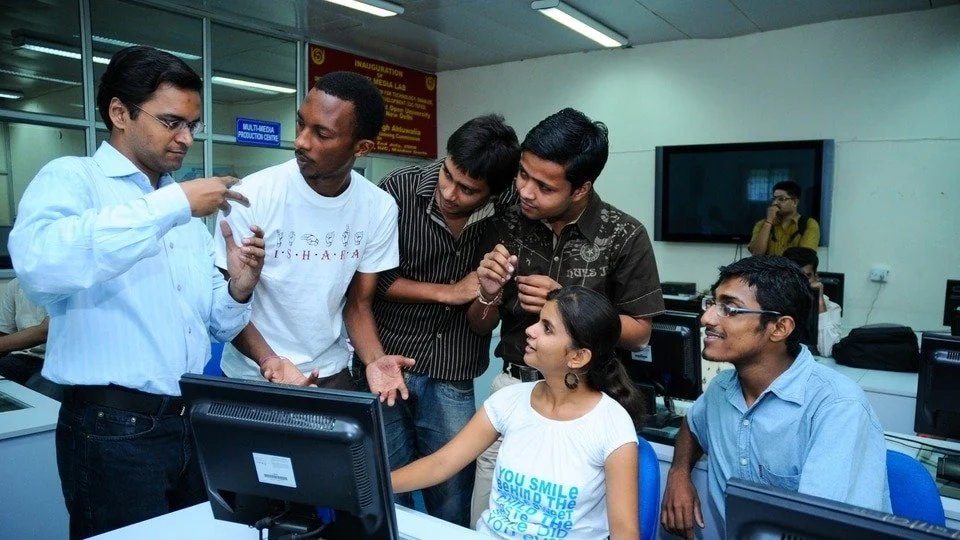
AI can provide every child with a personalised tutor that speaks their mother tongue, adapts to their pace, and presents ideas through tailored pathways
speaking inquiries
Vivek delivers vibrant, memorable keynotes that teach leaders and organizations how to thrive in the new industrial era

featured Videos
VideosList


Academic Papers
Academic Papers List
Women are one particularly understudied group of entrepreneurs. We know very little about female entrepreneurs, and our ignorance of this important demographic is a serious blind spot in any effort to increase the total number of entrepreneurs participating in our economy. What little we do know suggests that women are not nearly as active in the entrepreneurial space as they could be.
This study attempts to address part of this knowledge gap. Our findings show that successful women and men entrepreneurs are similar in almost every respect. They had equivalent levels of education early interest in starting their own business, a strong desire to build wealth or capitalize on a business idea, access to funding, and they largely agreed on the top issues and challenges facing any entrepreneur.

In this paper, we explore company founders’ opinions and observations about their own trajectory and what influenced the success or failure of their businesses. The findings clearly contradict some strongly held beliefs about starting a business and entrepreneurship. The four most important factors for entrepreneurial success, according to our respondents, are prior work experience, learning from successes and failures, management teams, and luck.
Networks and financing also were important factors. Surprisingly few took venture capital or angel financing in their first ventures. Another surprise was the lack of reliance on alumni networks; it could be that being to obtain access to the alumni network, has been overstated as a benefit for startups. However, lessons learned in college are greatly valued, particularly for alumni of Ivy League schools.

Entrepreneurs are among the most celebrated people in our culture. However, very little is known today about the backgrounds, life histories, motivations and beliefs of these entrepreneurs. So myths and stereotypes prevail. The commonly held belief is that entrepreneurs are young, lightly-educated, childless unmarried workaholics. They are perceived to come from rich families and graduate from elite colleges.
But is this true? We found that most founders came from middle-class or upper-lower-class backgrounds, are well-educated and married with children. The strongest motivation for starting a company was to “build wealth”. Other popular motivators included capitalizing on a business idea; the appeal of a startup culture; a desire to own a company; and a lack of interest in working for someone else.

Since even before the 2008 financial and economic crisis, some observers have noted that a substantial number of highly skilled immigrants have started returning to their home countries, including persons from low-income countries like India and China who have historically tended to stay permanently in the United States.
Who are these returnees? What motivated their decision to leave the United States? How have they fared since returning? This paper attempts to answer these questions through a survey of 1,203 Indian and Chinese immigrants who had worked or received their education in the United States and returned to their home country.
We find that, though restrictive immigration policies caused some returnees to depart the United States, the most significant factors in the decision to return home were career opportunities, family ties, and quality of life.
The popular image of American tech entrepreneurs is that they come from elite universities: Some graduate and start companies in their garages; others drop out of college to start their business careers. The dot-com boom reinforced the image of technology CEOs being young and brash. But, even though Bill Gates and Steve Jobs founded two of the world’s most successful companies, they are not representative of technology and engineering company founders. Indeed, a larger proportion of tech founders are middle-aged, well-educated in business or technical disciplines, with degrees from a wide assortment of schools. Twice as many U.S.-born tech entrepreneurs start ventures in their fifties as do those in their early twenties, as this paper will show.
We observed that, like immigrant tech founders, U.S.-born engineering and technology company founders tend to be well-educated. There are, however, significant differences in the types of degrees these entrepreneurs obtain and the time they take to start a company after they graduate. They also tend to be more mobile and are much older than is commonly believed.
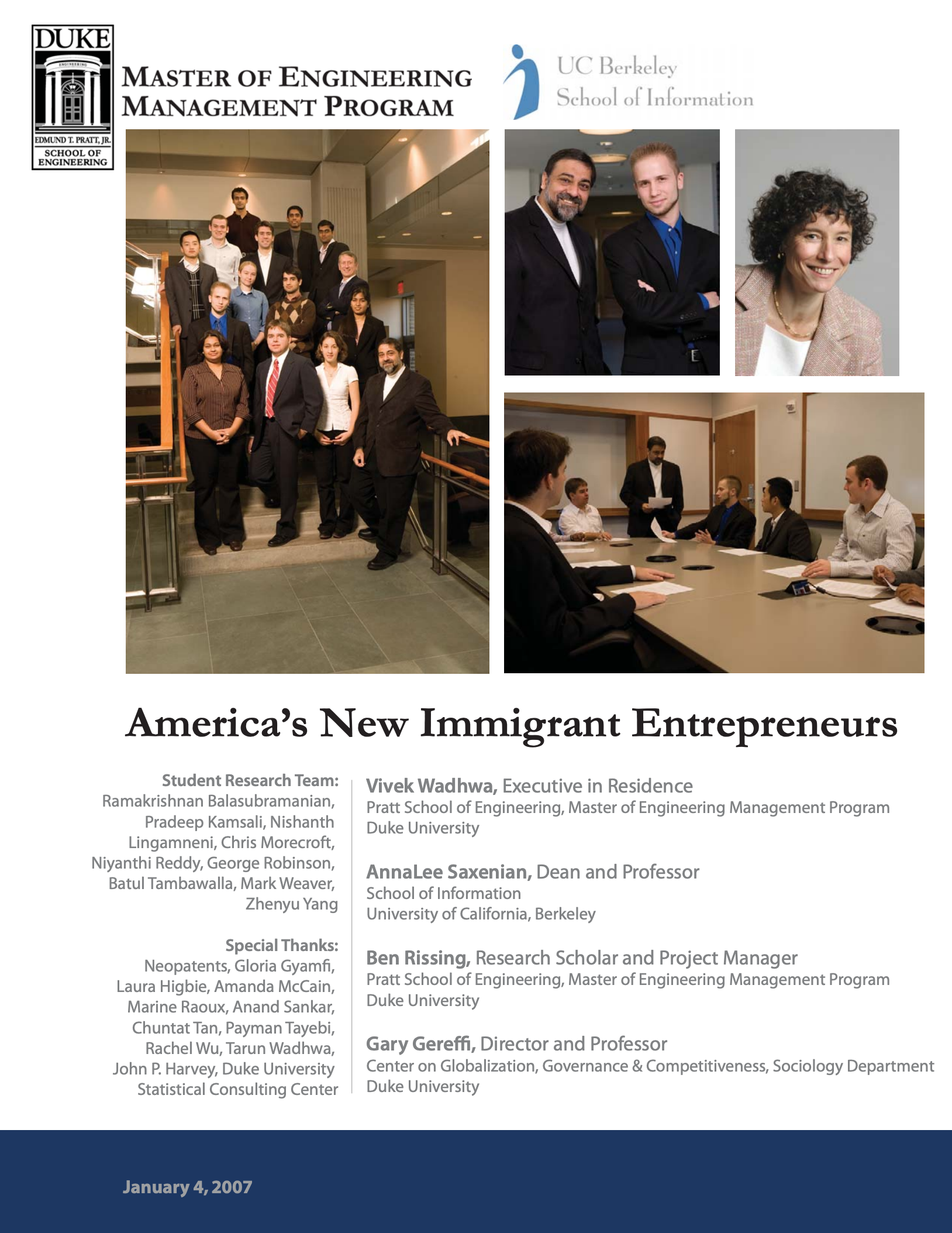
This purpose of this research was to assess the contribution of skilled immigrants in the creation of engineering and technology businesses and intellectual property in the United States. We found there was at least one immigrant key founder in 25.3% of all engineering and technology companies established in the U.S. between 1995 and 2005 inclusive. We estimate that together, this pool of immigrant-founded companies was responsible for generating more than $52 billion in 2005 sales and creating just under 450,000 jobs as of 2005. This research shows that immigrants have become a significant driving force in the creation of new businesses and intellectual property in the U.S. and that their contributions have increased over the past decade.
Best-selling books